
This is the beginning of my Realm of the Elderlings posts (wow so crazy). I said in my initial post that I would be covering 5 chapters a week. My current plan is to structure these posts starting with a summary (ideally brief), then some of my general thoughts on the section I read, followed by the gay and neurodivergent corners, and finally any concluding thoughts I have.
Summary
This will not be one of the brief summaries, but in my defense, A LOT happens in the first few chapters of this book.
Assassin’s Apprentice starts when we meet a six year old boy, our main character, who is being abandoned by his maternal grandfather at a fort called Moonseye in the mountains. He hears but does not see his mother before he is abandoned with a guard at the fort gates who is told that he’s “Chivalry’s bastard”. The guard brings the boy inside to his newfound uncle, Prince Verity, and we discover that he apparently either doesn’t know his own name or doesn’t have one. Verity marks his presence and sends the boy and the guard on to the kitchens, where he is introduced to his father Chivalry’s man Burrich. Burrich names him Fitz and puts him in the stables to sleep, and from here, Fitz enters the world of Six Duchies politics and meets the people who will come to define his life. The final major character we meet before leaving Moonseye is Prince Regal, who says he and his mother are advocating for Fitz to be disposed of.
Fitz travels back to the capital of the Six Duchies, Buckkeep, with Burrich. He says he maybe meets his father but doesn’t remember it. He begins bonding with a puppy, Nosy, before the start of the journey and continues to bond with him as they have adventures in Buckkeep castle and Buckkeep town. We meet the street urchins in town, including Kerry and Molly Nosebleed, who are important to Fitz because they know him as Newboy rather than as Chivalry’s bastard who caused the highly-favored King-in-Waiting to step down.
We also begin to learn more about Burrich, who functions as a secondary protagonist in this book. Six-year-old Fitz thinks he’s basically an old man and a warrior past his prime, but Burrich is at most 30 at this time (and I’d say probably younger, like 26-28). Burrich has lost a lot of status due to Chivalry abdicating and a leg injury he took defending Chivalry from a boar. Fitz also specifically remarks at one point that he can’t heal his leg injury the way he seems to heal the animals in his care, which is an interesting detail to remember for later.
Burrich also introduces us to the Wit, a magic that acts as a stand-in for otherness in the series. Fitz and Nosy form a bond that seems to give Fitz the power to repel living things away from himself and others. He almost kills Molly Nosebleed’s father on accident using this magic. At one point, Burrich catches him and Nosy together and realizes that they’re deeply Wit bonded. He’s horrified and disgusted and decides that he needs to separate Fitz and Nosy to protect Fitz and Chivalry’s good name. He takes Nosy away and Fitz eventually feels his bond with Nosy snap, which he assumes happens because Burrich kills him. This causes Fitz to become incredibly lonely at Buckkeep because he doesn’t connect well with people and feels he’s lost his only friend. Fitz is still 6 years old at this point.
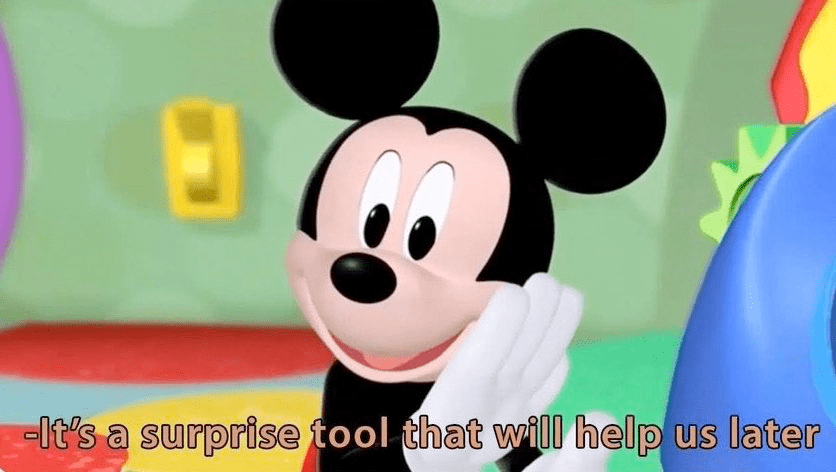
There’s a time skip of a few years after this, and the next important plot point is King Shrewd, Regal, and the King Shrewd’s new fool (it’s a surprise tool that will help us later) coming across Fitz scavenging food in the Great Hall after a feast. Shrewd ends up deciding to officially take Fitz under his protection and tutelage as long as Fitz is willing to swear his undying loyalty to the Farseer line (10 years old at this point). Fitz agrees, and Shrewd gives him a special pin he can use to gain admittance to his quarters at any time. Regal is a snot about Fitz being alive (as per usual), but the Fool hits him with a witty comeback this time, so it’s not so bad. Fitz promising his undying loyalty to King Shrewd is also the first time Fitz points out that someone is using the Skill on him.
After this, Fitz moves to a room in the castle and begins learning how to care for animals, swordplay, and how to read, write, and do math. He also begins his apprenticeship with Chade, Shrewd’s master assassin. Chade is initially very kind to Fitz, and he becomes a second father figure to him. Burrich and Fitz have a long conversation after Fitz meets Chade for the first time that Fitz misinterprets as Burrich resenting his existence but that gives the reader a lot of insight into who Burrich is, what his belief system is, and the politics of his and Fitz’s positions at Buckkeep.
A few years into Fitz’s apprenticeship, Shrewd decides to test Fitz’s loyalty to him and the crown by having Chade tell Fitz to steal something from the king. Fitz can’t do it, and I think this shows the depth of Shrewd’s skill command to be loyal to the crown. This chapter shows how manipulative Chade can be and how even the good father figure that Fitz thought he had in Chade was never real. It’s a pretty sad point to end on, but Chade does ultimately apologize to Fitz (not that I put much stock in it).
General Thoughts
Fitz and Nosy’s bond is one of my favorite parts of the beginning of this book. It’s such a pure connection between two young animals, and it fills my heart with joy. The first time I read the series, I was initially furious with Burrich for killing Nosy. It’s not as hard to stomach on a reread, probably because Burrich really grew on me the first time I read the series (also, I have serious doubts that Burrich would kill an innocent puppy now that I know him better). I think he’s one of the most fascinating characters in the Farseer trilogy, and one of the most realistic. I hate how he treats Fitz with respect to the Wit and it leads to a lot of issues Fitz ends up having down the road. What draws me in is how clear it is that Burrich also has the Wit and that he hates himself for it. I’ll expand more on this in both the gay and neurodivergent corners, since the Wit plays into both of those themes.
I mostly liked Chade when I first read Assassin’s Apprentice, but now that I’m on a reread my opinion has changed. I saw a theory once when browsing online that someone Skilled loyalty to the Farseers into Chade when he was young and that’s what makes him such a Farseer fanatic (Farseernatic?), and I think that’s an interesting theory with merit. I don’t know if Shrewd was Skilling Fitz to tell him the truth in the scene where he gives Fitz the pin or if he was Skilling loyalty into Fitz, but he’s clearly using the Skill to ensure Fitz’s loyalty in some fashion. It is implied that Chade was treated worse than Fitz as a young bastard, so I don’t think it’s outside the realm of possibility that the same thing happened to him. Right now, Chade doesn’t really tie into either of the themes that I want to discuss, but let’s note his manipulation of Fitz in chapter 5. Most of the time when I use the word neurodivergence, I’m talking about ADHD or autism (or both), but the word has a broader definition than that. Many people “theorize” that Fitz has C-PTSD (I would argue the only reason this isn’t canon is because they don’t know what mental health is in-universe) and C-PTSD falls under the neurodivergent umbrella. The things that Chade says to Fitz on-page when Fitz makes a mistake are so bad it reads like memes of what to tell people with anxiety that say “remind them that it’s all in their head and they’re acting irrationally!”.
We don’t get an in-depth introduction to very many other characters during this section, but I wanted to shout out Verity for being kind and straightforward when Fitz was abandoned on his doorstep and Regal for being a real bastard. Shrewd also seems like a wise and benevolent king so far. I think something that’s interesting to consider that comes from the first chapter epigraph is that the royals have their names sealed into them at birth and we know that it’s supposed to inform how they act for the rest of their lives. It’s clear already from Regal that that is not strictly true, and I think something that’s interesting is that tracking when people are going by the natures ascribed by their names vs when they’re not. We already have the duality of Chivalry, since he’s described as being kind of uptight and good to a fault in a way that makes others feel bad (although I think that last part is Chade propaganda), but his one moment of not being chivalrous (having sex outside of marriage) causes his downfall. It’s something I’ll continue to keep an eye on as the story progresses.
Gay corner
As I mentioned in my general thoughts, Burrich is one of the most interesting characters in the story and specifically this book to me. His arc is learning how to be a parent to this child he never asked for or wanted, and boy does he fuck that up, in ways that are so similar to internalized homophobia. Burrich’s headspace at the beginning of the book is: “I’ve been abandoned by my liege lord to take care of his newly revealed bastard. I view that man as the epitome of morality and honor and try to live my life in a way that would make him proud. This now includes raising his son, whose very birth disrupted the line of succession and made him enemies. In addition to keeping the boy safe, I just discovered he has the same magic I do that is reviled across the land, including by me. He will be publicly and shamefully executed if anyone else finds out he has this magic, just like I will.”
In other words, he’s going through it. Honor is the most important quality/trait to him, and he feels that if he does not pass on the same exact code of honor and loyalty to Fitz, he’s failed.
Additionally, Fitz is the last piece of Chivalry that Burrich has access to. He sees Chivalry as the perfect example of masculinity/manhood that he craves and aspires to be, and the Wit separates him from that. He can’t stomach the idea that Fitz is “tainted” by this magic because that means that Chivalry wasn’t perfect. I also think that Burrich and Chivalry were exploring each others’ bodies. The contradiction already exists where he has the Wit but denies it within himself, even though he clearly knows how to use it (he can repel back at Fitz). Him being in semi-requited but unacknowledged gay love with Chivalry adds depth to that storyline. If you don’t believe me that they were in love, here’s a collection of quotes to think on:
“‘Well,’ he said at long last. “If I know your father, he’ll face up to it square and do what’s right. But Eda only knows what he’ll think is the right thing to do. Probably whatever hurts the most.’” – Burrich, page 14 of the Kindle edition of Assassin’s Apprentice
“If Chivalry will not have me with him, it’s the least I can do for him. I’ll see that his son grows up a man, and not a wolf. I’ll do it if it kills both of us!” – Burrich, page 46 of the Kindle edition of Assassin’s Apprentice
“Big old tusker, was going to take Chiv down , until Burrich got in the way.” – Brant, page 64 of the Kindle edition of Assassin’s Apprentice, describing how Burrich got the disabling injury to his leg.
“Patience blamed Burrich as well for Chivalry’s lapse in morals.” – Narrator Fitz, page 73 of the Kindle edition of Assassin’s Apprentice, describing why Chivalry’s lawful wife doesn’t like Burrich
“‘I just want to do my best by you.’
This was a whole new idea to me. After a moment I asked, “Because if you could make Chivalry proud of me, of what you’d made me into, then maybe he would come back?’” – Burrich and Fitz, pgs 87-88 of the Kinde edition of Assassin’s Apprentice
I also recommend reading the entire passage from page 42 to page 47 of Burrich and Fitz’s fight over Nosy and the Wit, because it’s so well written that it feels much longer than 5 pages. Having gone through my own journey with homophobic caretakers, my heart breaks for Fitz in this moment, but I can understand Burrich’s point of view. That doesn’t make it right and I think this is one of the biggest traumas Fitz faces in his life that DEEPLY affects his ability to form romantic relationships in the future. That said, I feel a deep sense of kinship with Burrich because of his internalized homophobia. His specific concerns about the Wit making a man less than a man also read similarly to comments people make in real life about gay men being ‘less manly’ (whatever the fuck that means) than straight men. Patience, Chivalry’s wife, also specifically dislikes Burrich because she thinks he forced Chivalry to follow him into a life of sin. It reads so much like modern American homophobia that I have to believe it’s intentional. What’s interesting here is how the first-person perspective focuses on Fitz’s sensory experiences with the Wit.
Neurodivergent corner
Fitz at the beginning of the book is a 6 year old child who hates talking and prefers the company of dogs to men (who can blame him). His bond with Nosy allows him to access extrasensory perception through Nosy’s senses. It also gives him a feeling of groundedness and safety because he has another being in this world who loves him unconditionally. Something I want to draw attention to in this passage is how the way that Burrich describes children with the “Old Wit” sounds like the description of a child with level 1 autism without modern medical terms.
‘You don’t speak like a child,’ he observed suddenly. ‘But I’ve heard that was the way of it, with those who had the old Wit. That from the beginning, they were never truly children. They always knew too much, and as they got older they knew even more.’ – Burrich, page 44 of the Kindle edition of Assassin’s Apprentice
Fitz doesn’t talk because he doesn’t feel like he needs to to express himself, and when he does it’s in full sentences. He prefers bonding with animals to humans (once again, who could blame him, but that is a symptom of autism apparently). Later on in this set of chapters, a boy is escorting him somewhere in the castle and gets himself alone with Fitz:
I felt his rising hostility as if I’d entered a dog’s territory unannounced, But a dog I could have touched minds with and reassured of my intentions. With Brant there was only the hostility, like a storm rising. – Narrator Fitz, page 64
Communicating with animals is easy because it’s nonverbal and animals typically aren’t malicious. Humans expect you to communicate verbally and can be malicious, like Brant. Maybe I was just a lot like Fitz as a child, but these are all symptoms of autism. He hates the fancy court clothing he’s supposed to wear because it’s uncomfortable, and if I learned anything from having a neurodivergent family, it’s that we don’t do the bad textures whenever possible. Other kids also aren’t very nice to Fitz due to the whole royal bastard thing, but he says he doesn’t care to bond with them in the first place.
‘That’s how Chivalry ruled. By example, and by the grace of his words. So should any real prince do’
‘I’m not a real prince. I’m a bastard.’….
Burrich sighed softly. ‘Be your blood, boy, and ignore what anyone else thinks of you.’ – Burrich and Fitz, pgs 85-86 of the Kindle edition of Assassin’s Apprentice
Fitz tends to take things literally, which is a well-known symptom of autism. He’s also being somewhat humble/self-hating here, which I can acknowledge. After this point, Chade takes Fitz under his wing and stokes Fitz’s logical and social intelligence, which masks his autism to an extent. Social skills can be learned and used by autistic people. We’ll definitely be coming back to this, though.
Final thoughts
I just want to underscore that Shrewd gave Fitz a Skill directive to believe that he will always be honest to him and treat him as best as he possibly can, to come to him anytime anyone comes to Fitz offering treason, and to never use “ill use” as a reason to turn on Shrewd. In chapter 5, Shrewd is testing the strength of his Skill directive to Fitz. Chade isn’t an innocent here, since he was still really manipulative towards Fitz, but I don’t think he knew how badly this would affect Fitz because I don’t think he knew about the Skill directive or how lonely Fitz is. That whole chapter is super fucked up, and what’s even worse is that it’s competing for the most fucked up and traumatizing thing that happens to Fitz in this section of the book (with his parents abandoning him and Burrich severing his bond with Nosy). Fitz is a really emotional and sensitive kid, and my heart breaks for him in these chapters. It’s not going to get better, though, so maybe I like the pain.
 Lemonade Book Reviews
Leave a comment